For hay and forage growers and custom balers
Mow down when the hay will cure.
Every field and every cutting checked for its drying days, with odds from up to 146 forecast runs judged one by one.
The costly call
One rain on the windrow costs a cutting's quality
Rain on a windrow washes out feed value and leaves, and one bad call costs a cutting's worth of quality that no rake can win back. A forecast's "30% chance" doesn't say whether your three days stay dry.
How it works
From your place to an answer
Drop a pin on each hayfield
Add every hayfield you cut, your own or a custom baling customer's.
Set your curing days and bale type
Set your curing days and whether you're making dry hay or baleage.
Pick the cut day
See which cut day this week gives the windrow its dry days, how sure that is, and when to bale.
In the app
See it on a real forecast
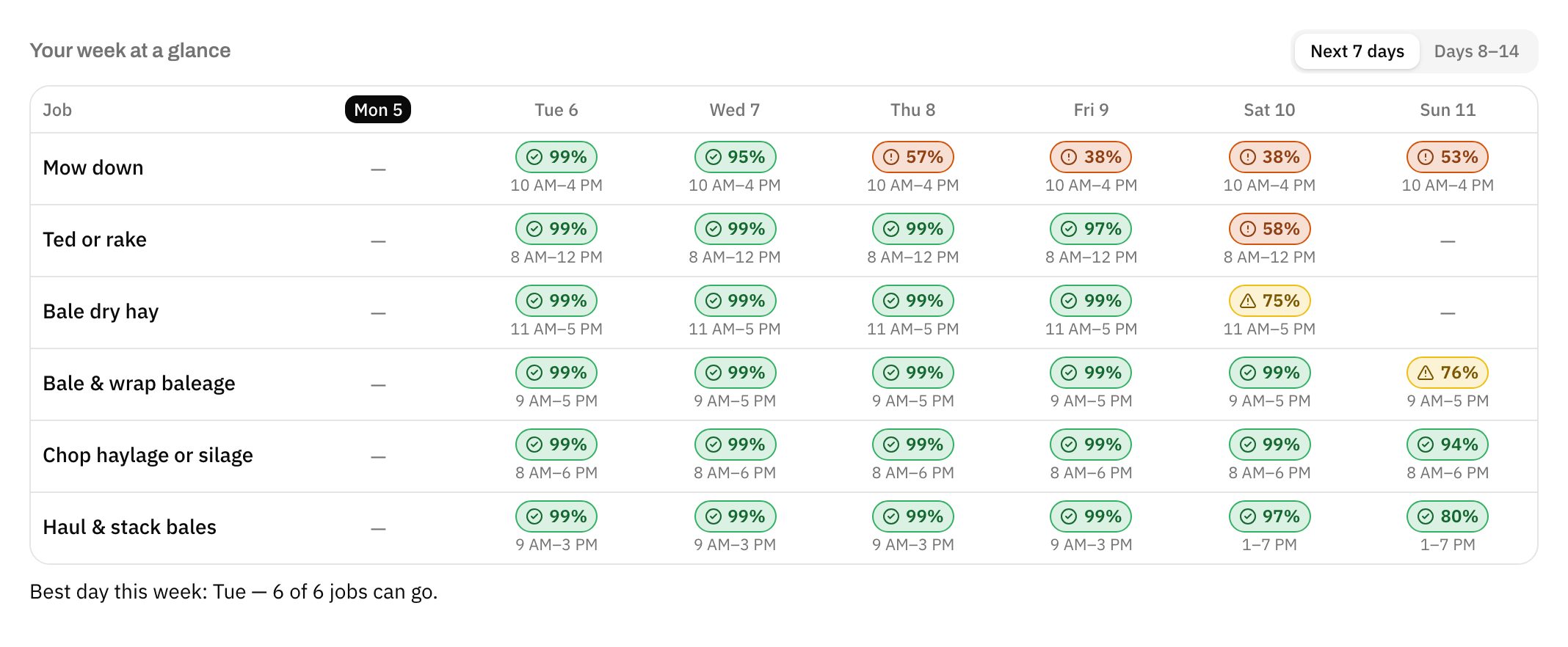
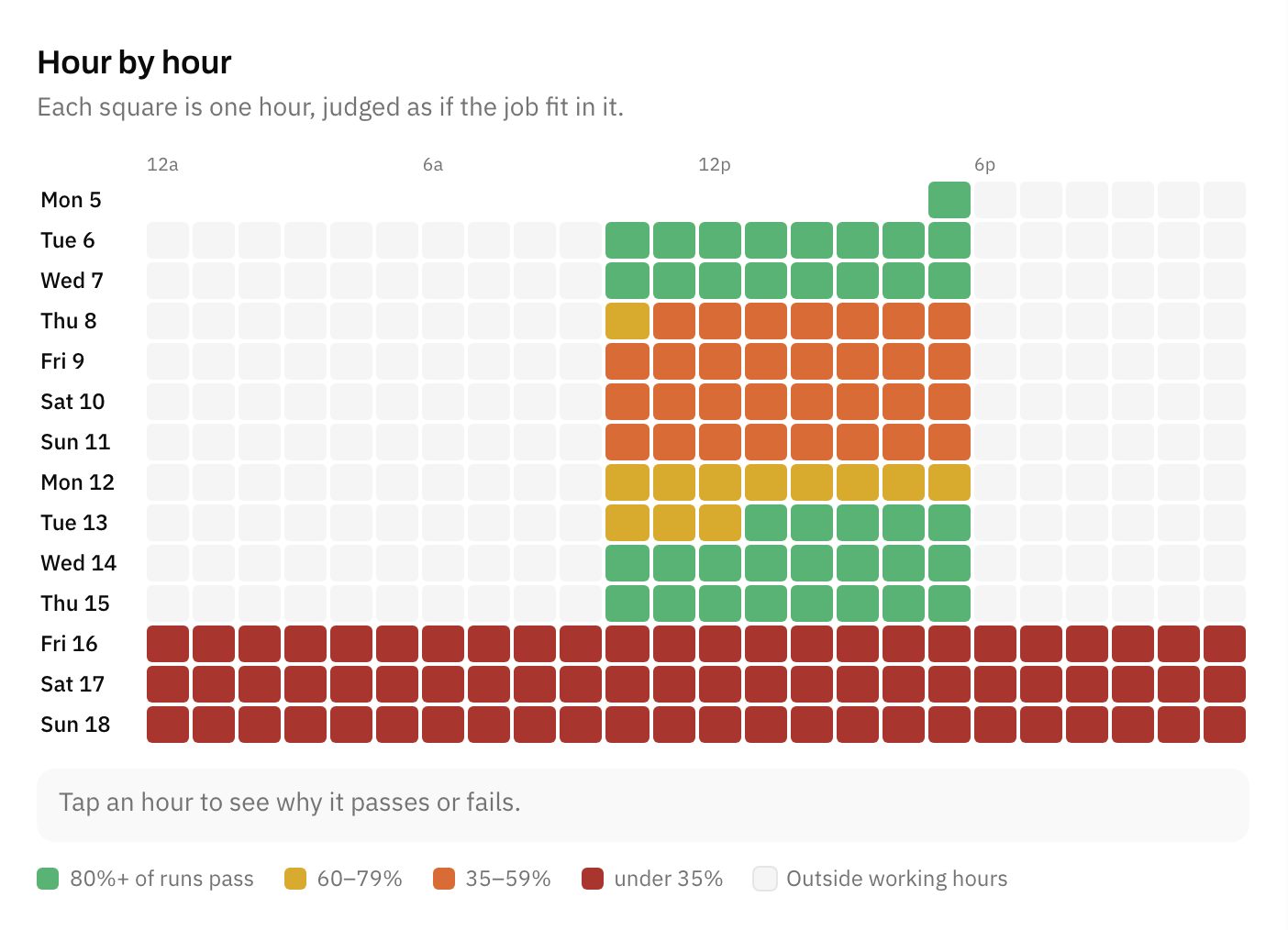
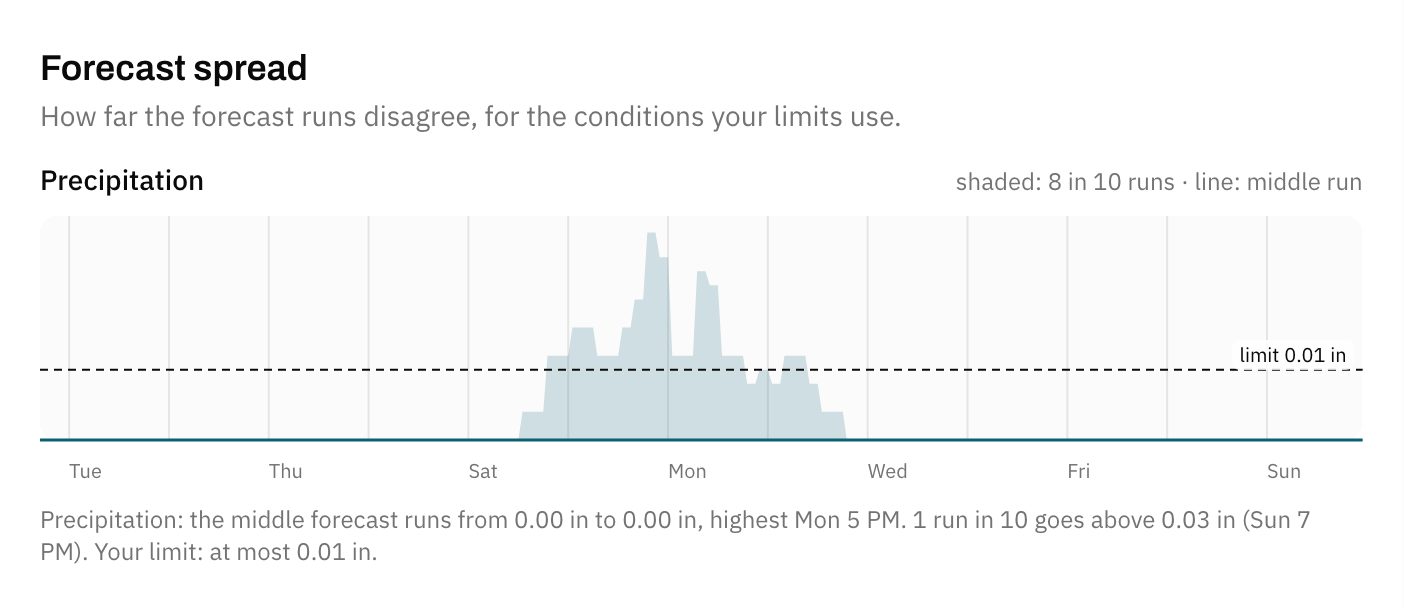
Real forecasts for Twin Falls, Magic Valley, Idaho, captured October 5, 2026. Yours will be for your own place and limits.
What you get
Built for hay and forage growers and custom balers
Curing window odds
The best cut day this week for 2–4 drying days, with the odds that the windrow stays dry.
Rain-on-hay loss
What a rain could cost this windrow if it comes before you bale.
Drying-power hours
Sun, wind and dry air by day, dew by night, as an index for each drying day.
Baling window
An afternoon humidity check for small squares, big squares and rounds, after the dew burns off.
Baleage window
One wilting day, then bale and wrap the same day.
Haul & stack before the rain
Get the bales off the field and under cover, with the heat on the stacking crew beside it.
The field jobs it times
Mow down
Cut once the dew is off, then the crop needs dry weather in the windrow until it is baled. Set to 3 curing days before baling. The Curing window odds card compares every cut day this week.
6-hour window · daylight only
Ted or rake
Fluff or roll the windrow while there is still some moisture in it, so leaves stay on. University of Kentucky AGR-62, Quality Hay Production: rake or ted at about 40% moisture to cut leaf loss. Moisture is not forecast; the morning hours stand in for it.
4-hour window · daylight only
Bale dry hay
Bale in the afternoon once the dew has burned off and the humidity is down. University of Kentucky AGR-62: without a preservative, bale at 20% moisture or less for small bales and 18% for large packages. The forecast cannot see bale moisture; check it with a tester.
6-hour window · daylight only
Bale & wrap baleage
Bale wilted forage and wrap it the same day. University of Kentucky AGR-235: bale at 40–60% moisture (best 50–60%), above 65% risks clostridial fermentation; wrap within 24 hours of baling.
8-hour window · daylight only
Chop haylage or silage
Chop wilted forage into a wagon for the bunker, bag or upright. Wagons stay off the field for a day after a soaking.
10-hour window
Haul & stack bales
Get bales off the field and under cover before they get wet. The Heat on the stacking crew card sits beside this job.
6-hour window
What else it watches
- Curing window odds
- Rain-on-hay loss
- Drying-power hours
- Next three drying days
- Rain on the field, last 7 days
- Heat on the stacking crew
Every answer counts the forecast runs that keep the whole field job inside your limits, at your field.
Founding members
Join the beta — your first six months free
Only 10 founding places: the first 10 hay and forage growers and custom balers to apply get the Hay & Forage edition free for six months when it launches. No card needed. When they're gone, it's the waitlist.
Only 10 founding places.
- Your first six months of the Hay & Forage edition free when it launches
- Early access to the app as it is today
- A say in which field jobs the Hay & Forage edition times next
Questions
Asked before you start
How is this different from a weather app?
A weather app gives one forecast and a rain percentage per day. This checks your whole curing window in each of up to 146 forecast runs and tells you how many keep the windrow dry.
Can I keep a record of my calls?
Yes. Log a cut or bale decision and the decision log keeps the odds, the forecast conditions and your note for that field. Export it to CSV. It records what the forecast showed, not what fell.
Does it know when my hay is dry enough to bale?
No. It shows drying weather and dew as an index; a moisture tester tells you the bale moisture.
Does it work for baleage?
Yes. Switch the field to baleage and the window shortens to one wilting day before you bale and wrap.
What data does it use?
Forecasts for your field's grid cell: an hourly forecast plus up to 146 forecast runs from three independent forecast systems, pooled and judged run by run, 14 days ahead.
Where do the numbers come from?
Each one shows its source (University of Kentucky, University of Minnesota); the rest say "starting point" and are yours.