For irrigated farms deciding whether to run or skip the next set (pivot, sprinkler, drip or furrow)
Run the set, or let the rain do it?
A checkbook water balance for every field, crop water use for the week, and the chance that rain refills the profile before you pump. Each one comes from up to 146 forecast runs.
The costly call
A set run before a soaking rain is money down the drain
Every set you run before a soaking rain is pumping cost, labour and leached nitrogen gone. Every set you skip on a rain that never comes puts the crop behind.
$3.3 billion
spent on energy to pump irrigation water in 2023
How it works
From your place to an answer
Add your fields
Add each field, pick the crop and enter your soil's water holding and your system's gpm.
Set the starting point
Tell it when you last irrigated or when the profile was full.
Run, hold or skip
See whether to run, hold or skip, with the rain chance behind it.
In the app
See it on a real forecast
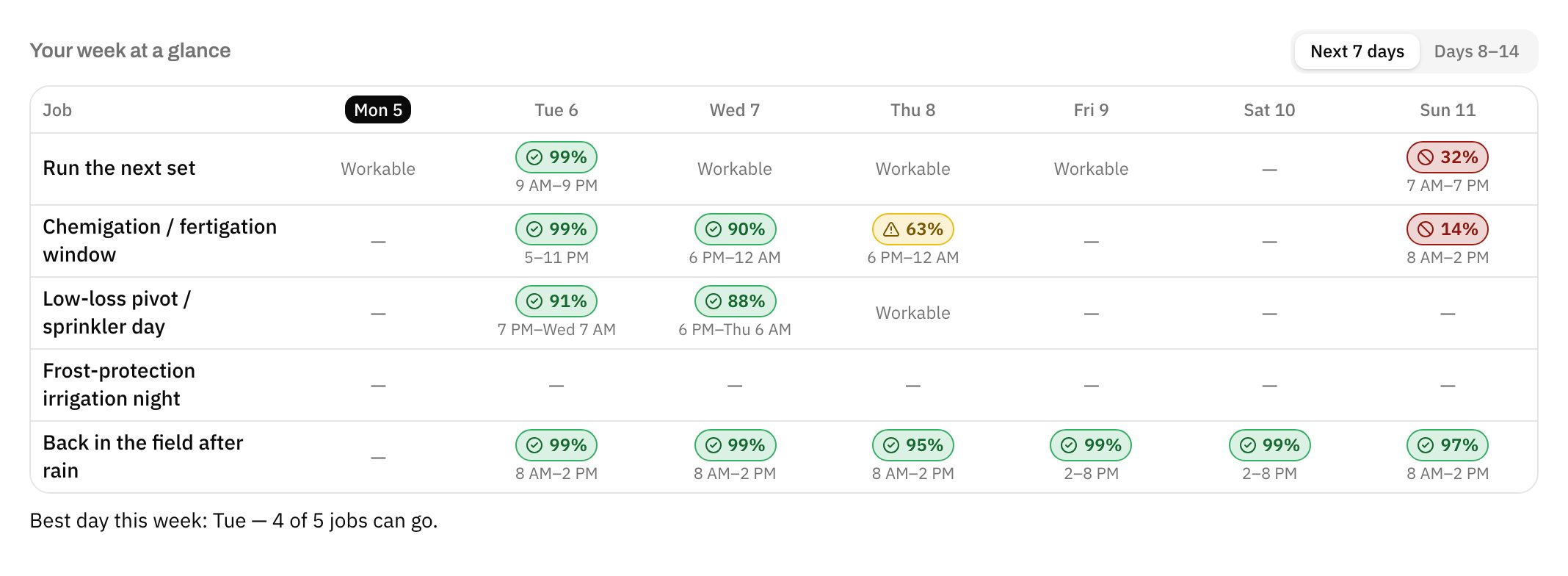
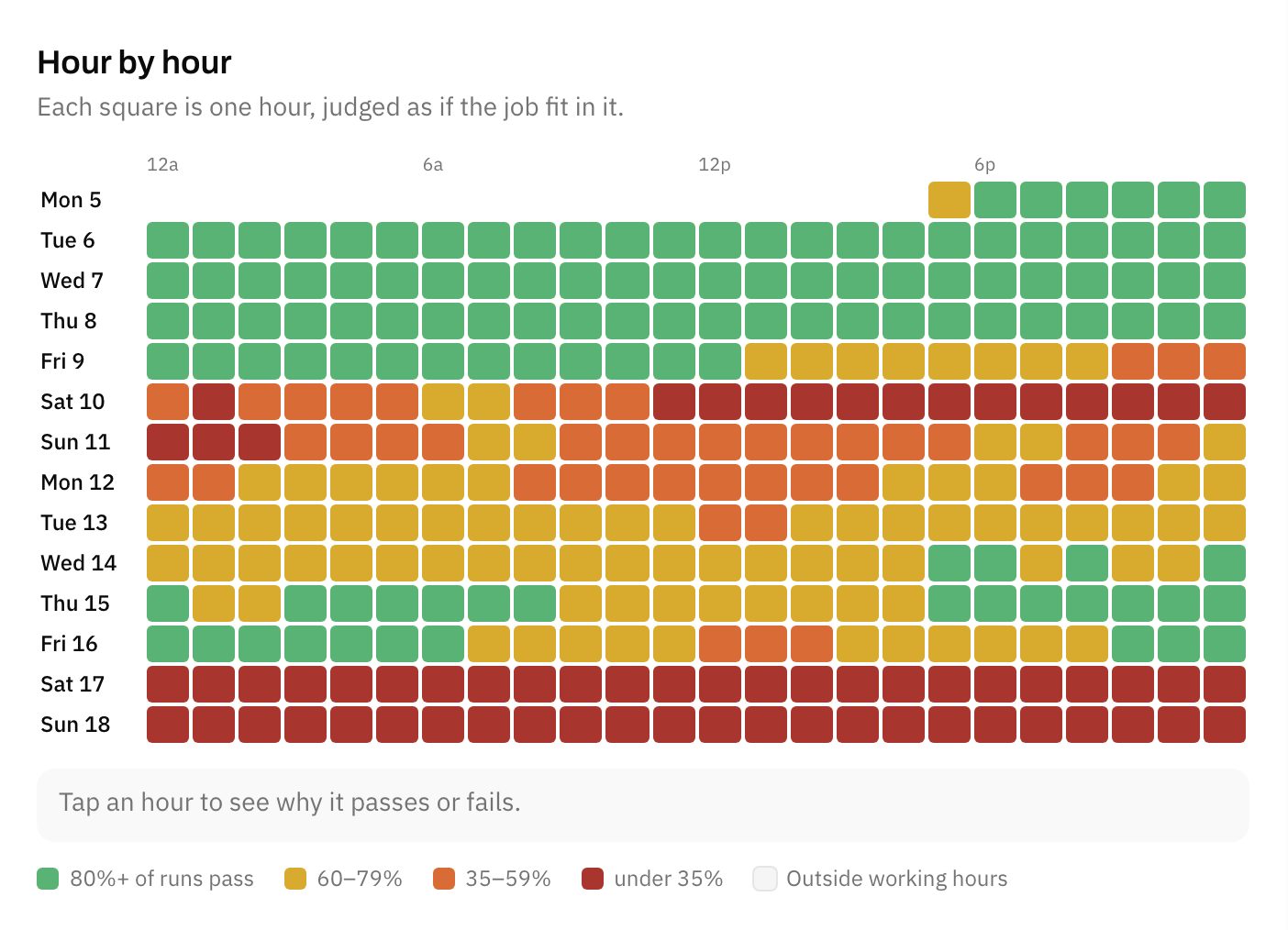
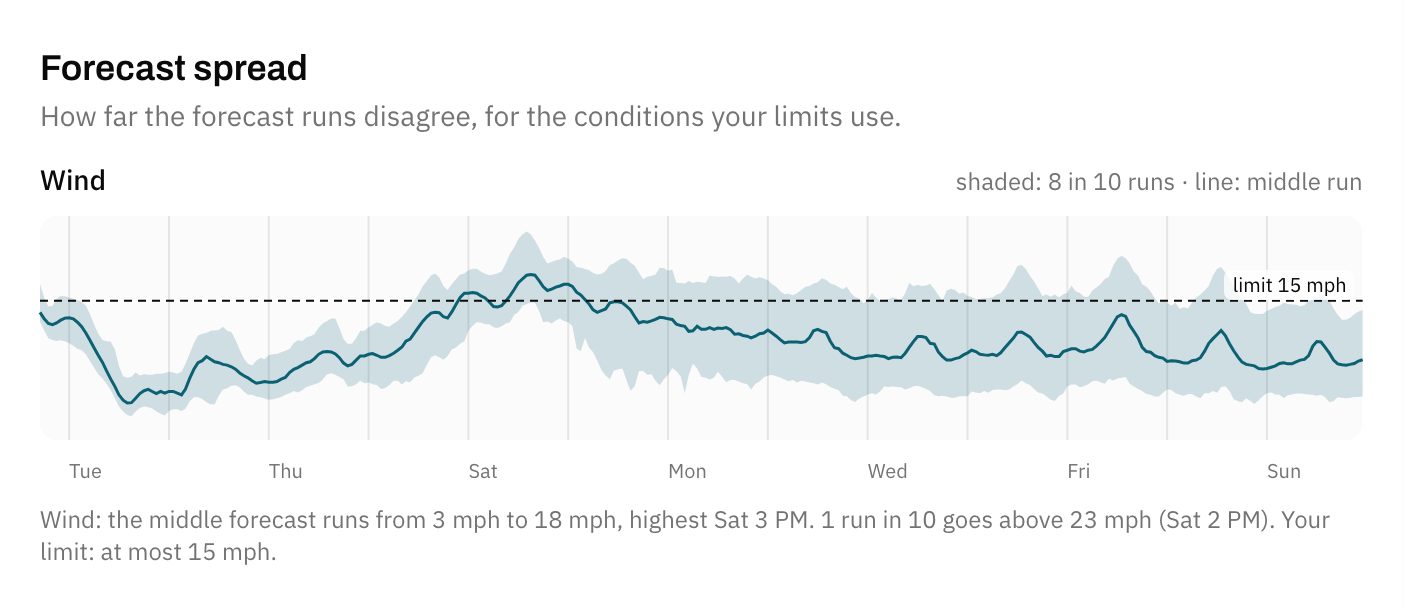
Real forecasts for Kearney, NE, Platte River valley, captured October 5, 2026. Yours will be for your own place and limits.
What you get
Built for irrigated farms deciding whether to run or skip the next set (pivot, sprinkler, drip or furrow)
Run or skip
Deficit against your trigger, with the chance rain covers the next set.
Crop water use next 7 days
Crop water use for the week, against your pivot's in/day.
Wind drift loss hours
Wind drift loss hours for sprinkler and pivot sets.
Chemigation and fertigation windows
Wind and rain-free windows for injecting through the system.
Frost-protection irrigation nights
Nights when protection is needed and wind is low enough for sprinkling to work. A window is a warning, not good weather.
Back-in-the-field check after rain
When the soil is dry enough to drive a pivot track or get equipment back on.
The sets it times
Run the next set
A full set or pivot round that is not wasted by wind or by a soaking rain right behind it: if half an inch or more is coming within 2 days, the set is likely wasted. Whether the field needs the set is in the Run or skip card.
12-hour window
Chemigation / fertigation window
Injecting fertiliser or a labelled pesticide through the system, on target and not washed off. Use the label's wind limit. Labels and state rules also require safety equipment (check valves, interlocks); the forecast does not check those.
6-hour window
Low-loss pivot / sprinkler day
Hours when less of the water blows off or evaporates before it reaches the canopy. The dry-air (VPD) limit comes from one forecast, so no chance is claimed for it.
12-hour window
Frost-protection irrigation night
A window here means frost protection is needed and wind is low enough for sprinkling to work, not good weather. Set the limit above your crop's critical temperature, start before the air reaches it and keep running until the ice melts.
3-hour window
Back in the field after rain
Soil dry enough to drive a pivot track, service the system or get equipment back on after a heavy rain or set. Soil moisture (top 1–3.5 in) comes from one forecast, so no chance is claimed for it.
6-hour window · daylight only
What else it watches
- Run or skip
- Crop water use next 7 days
- Wind drift loss hours
- Rain on this field, last and next 7 days
- Nights at or below 32 °F
- Rain against reference ET₀, last and next 7 days
Every answer counts the forecast runs that keep the whole set inside your limits, at your field.
Founding members
Join the beta — your first six months free
Only 10 founding places: the first 10 irrigated farms deciding whether to run or skip the next set (pivot, sprinkler, drip or furrow) to apply get the Irrigation edition free for six months when it launches. No card needed. When they're gone, it's the waitlist.
Only 10 founding places.
- Your first six months of the Irrigation edition free when it launches
- Early access to the app as it is today
- A say in which sets the Irrigation edition times next
Questions
Asked before you start
How is this different from a weather app?
A weather app tells you it might rain. We run your field's water balance and check every hour of the week in up to 146 separate forecast runs. Then we tell you the chance that enough rain falls to skip this set.
Can I keep a record of my irrigation calls?
Yes. Log a window and the decision log keeps the verdict, the share of forecast runs that passed and the conditions the forecast showed, with your note. Export it to CSV whenever you need it.
What data does it use?
FAO-56 reference ET₀ and hourly forecasts, up to 146 forecast runs from three independent forecast systems pooled and judged run by run, and season rain from 1 January, for your field's grid cell, refreshed through the day.
Do I need soil moisture sensors?
No. If you have them, reset the balance from them; it gets more accurate the more often you reset.
Where do crop coefficients come from?
FAO-56 Table 12 defaults for your crop. You can edit Kc as the crop grows.
Does a frost-protection night mean good weather?
No. It means protection is needed and wind is low enough for sprinkling to work. Start before the air reaches your crop's critical temperature and keep running until the ice melts.